


Table of Contents
- What Makes a Whey Protein Isolate 'Clean'
- Third-Party Tested Protein Powder: How to Verify Legitimacy
- How to Read Protein Supplement Labels for Quality and Purity
- Whey Protein Isolate vs Concentrate for Digestion and Absorption
- Filtration Methods That Matter: Micro-Filtered vs Ion-Exchange
- Sustainability and Environmental Impact in Protein Sourcing
- Budget-Friendly Clean Protein Strategies Without Compromise
- Frequently Asked Questions
Last Updated: September 23, 2026
What Makes a Whey Protein Isolate 'Clean'
When shopping for a clean whey protein isolate online, you're asking: how pure is this powder? At The Whey of the Lord, we define "clean" as a protein powder stripped of unnecessary additives, artificial sweeteners, and fillers, leaving high-quality amino acids and minimal processing byproducts.
Clean whey protein isolate starts with filtration that separates protein from lactose, fat, and milk solids while preserving amino acids. A truly clean product contains whey protein isolate as the primary ingredient, not whey concentrate mixed with fillers. This matters for digestion, absorption speed, and muscle recovery.
Most people confuse "clean" with "natural." Natural doesn't guarantee purity, a powder can be naturally sourced but still contain 15 grams of added sugar per scoop. Clean means third-party tested, free of artificial dyes, and transparent about every ingredient on the label.
Third-Party Tested Protein Powder: How to Verify Legitimacy
Third-party testing verifies that a clean whey protein isolate's contents match the label. This matters because the supplement industry is largely self-regulated.
A legitimate third-party tested protein powder displays the testing seal on the label or provides a batch-specific certificate of analysis showing amino acid profile, contaminant levels, and protein content verification. If a brand refuses to provide this certificate, that's a red flag.
Not all third-party testing is equal. Some labs only test basic protein content; others verify for heavy metals, microbial contamination, and banned substances. The Whey of the Lord uses rigorous third-party testing to confirm every batch meets standards for purity and safety.
How to Read Protein Supplement Labels for Quality and Purity
The ingredient list shows what's in the powder; the nutrition facts panel shows protein content per serving. Start with the ingredient list.
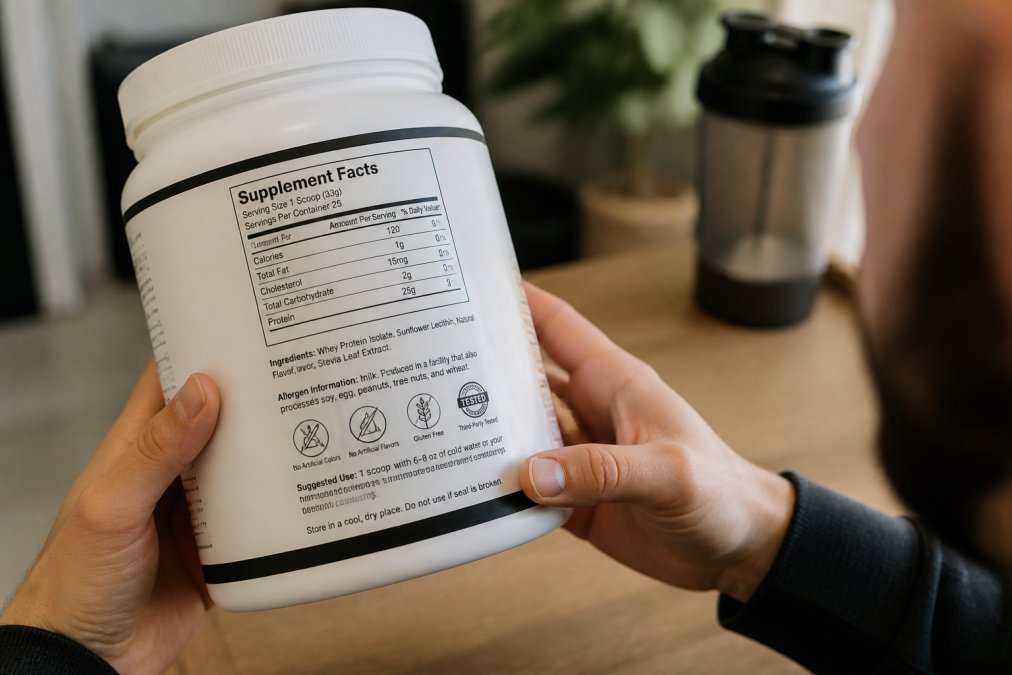
The first ingredient should be whey protein isolate or concentrate. If sugar or sweetener appears in the top three, the product prioritizes taste over nutrition. Scan for artificial sweeteners like aspartame, sucralose, and acesulfame potassium. If sensitive to additives, look for stevia or monk fruit.
Digestive enzymes help your body absorb protein more efficiently, especially if you've had stomach issues with other powders. Check the "other ingredients" section for lecithin, gums, or thickeners, generally safe but add volume without nutritional value.
A quality whey protein isolate should deliver at least 25 grams of protein per scoop. Note the scoop size, some brands use tiny scoops to inflate serving counts.
Whey Protein Isolate vs Concentrate for Digestion and Absorption
The difference between whey protein isolate and whey concentrate comes down to filtration and lactose content. Whey concentrate retains more lactose and fat, making it slightly less pure but often more affordable. Whey protein isolate goes through additional filtering, typically micro-filtered or ion-exchange processes, to remove more lactose and fat, leaving a higher protein concentration per gram.
Isolate wins for lactose-sensitive users. Concentrate contains 1-2 grams of lactose per serving; isolate contains less than 1 gram. Reduced lactose means faster absorption for post-workout recovery.
Bioavailability is slightly higher with isolate due to less fat and lactose competing for absorption. This matters most post-workout. For everyday intake, the difference is minimal.
Isolate costs more due to extra processing. If budget-conscious and lactose-tolerant, concentrate works. If digestion is an issue, isolate is worth the premium.
Filtration Methods That Matter: Micro-Filtered vs Ion-Exchange
Micro-filtration and ion-exchange are the two most common methods for producing whey protein isolate, producing different results in protein purity and bioactive compound retention.
Micro-Filtration (MF)
Micro-filtration uses mechanical screens to separate whey protein from fat and lactose through physical separation rather than chemical manipulation. This gentler process retains more bioactive peptides like lactoferrin and immunoglobulins that support immune function and muscle recovery.
Micro-filtered isolate yields 80-85 percent protein with 0.5-1.0 grams lactose per serving. The trade-off: more fat and lactose remain.
Ion-Exchange (IE)
Ion-exchange uses electrical charges to separate proteins from contaminants, yielding 90-95 percent protein content and lactose levels below 0.5 grams per serving.
The trade-off: ion-exchange denatures some heat-sensitive compounds. Choose ion-exchange for severe lactose intolerance; choose micro-filtration for maximum bioactive benefit.
Hybrid and Cross-Flow Microfiltration
How to Identify Which Method Your Protein Uses
Chocolate Testament Whey Protein Isolate →
Sustainability and Environmental Impact in Protein Sourcing
When buying clean whey protein isolate online, "clean" increasingly means clean sourcing. Understanding sustainability claims helps separate genuine commitments from marketing language.
Grass-Fed vs. Grain-Fed Dairy: The Environmental Case
Grass-fed whey comes from pasture-raised cattle, requiring less intensive feed production and synthetic fertilizers. Rotational grazing sequesters carbon in soil, offsetting some methane emissions.
Grass-fed whey contains 3-5 times more conjugated linoleic acid (CLA) than conventional whey, linked to improved body composition.
The trade-off is cost and availability. Grass-fed whey protein isolate typically costs more than conventional isolate because pasture-raised dairy operations are smaller, more geographically dispersed, and have longer supply chains. Sourcing is also seasonal in many regions, which can affect product consistency.
Third-Party Sustainability Certifications: What They Actually Mean
Non-GMO Project Verified means the whey comes from cattle not fed genetically modified corn or soy. This is a proxy for more intentional sourcing practices, but it doesn't guarantee environmental sustainability, a non-GMO operation can still use synthetic pesticides or unsustainable farming methods. The certification is meaningful but incomplete.
Organic certification (USDA Organic) requires that cattle are raised without synthetic pesticides, antibiotics, or growth hormones, and are fed organic feed. Organic dairy operations must also allow cattle access to pasture. This is a stronger environmental signal than non-GMO alone, though organic doesn't guarantee grass-fed (cattle can be fed organic grain indoors). Organic whey protein isolate costs more than conventional.
Certifications to look for:
- USDA Organic: Strictest feed and treatment standards; requires pasture access.
- Non-GMO Project Verified: No genetically modified feed; weaker environmental guarantee.
- Regenerative Organic Certified (ROC): Emerging standard that requires soil health practices, fair labor, and animal welfare; rarest and most expensive.
- Carbon Trust or similar carbon-neutral claims: Verify these with third-party documentation; many are unsubstantiated.
Domestic Sourcing and Supply Chain Transparency
Whey protein isolate manufactured in the United States is subject to FDA oversight and established quality standards. Domestic production also reduces transportation emissions compared to imported isolate from overseas facilities. When a brand sources milk from USA dairy farms and manufactures domestically, you can verify the supply chain through public records and regulatory filings, transparency that's harder to achieve with international sourcing.
Water Usage and Waste Management
Whey protein isolate production is water-intensive. The filtration and processing steps require significant water input, and wastewater management is critical. Brands that invest in closed-loop water systems, wastewater treatment, and recycling programs have a lower environmental impact than those using standard industrial processing.
The Cost-Sustainability Trade-Off
True sustainability costs more because it requires smaller-scale operations, more careful sourcing, and investment in environmental practices. A grass-fed, organic, domestically sourced whey protein isolate will cost more than conventional isolate. Budget-conscious buyers can still make sustainable choices by prioritizing one factor, such as non-GMO or domestic sourcing, rather than pursuing all certifications simultaneously.
Budget-Friendly Clean Protein Strategies Without Compromise
Clean doesn't have to mean expensive. The Whey of the Lord offers clean whey protein isolate at $59.99 per container, a price point that doesn't sacrifice third-party testing or ingredient quality. Here's how to stretch your protein budget without cutting corners.
Buy larger containers when possible. A single large tub costs less per serving than multiple smaller packages. Calculate the price per gram of protein, not the total container price. A $60 tub with 25 servings of 25 grams protein each costs about $0.10 per gram of protein. That's reasonable for third-party tested, USA-made isolate.
Flavor versatility extends your supply.
| Product | Flavor | Protein per Serving | Price | Best For |
|---|---|---|---|---|
| Chocolate Testament | Chocolate | 25g | $59.99 | Post-workout recovery |
| Heaven's Cream Vanilla | Vanilla | 25g | $59.99 | Versatile daily use |
| Salted Caramel of Glory | Salted Caramel | 25g | $59.99 | Dessert alternative |
| Divine Chocolate Caramel Cookie | Chocolate Caramel | 25g | $59.99 | Indulgent nutrition |
Frequently Asked Questions
How can I verify that a clean whey protein isolate is actually third-party tested?
Legitimate third-party testing means an independent lab has verified the ingredient list and screened for banned substances. Request the actual lab report from the brand, reputable companies provide this on their website or upon request. Be skeptical of vague claims like 'laboratory tested' without naming the specific lab or certification body.
What's the difference between whey protein isolate and concentrate for digestion?
Whey protein isolate undergoes additional filtration to remove more lactose and fat, making it easier to digest for people with sensitive stomachs. Isolate typically contains 90% or more protein per serving, while concentrate contains 70-80% protein with more lactose remaining. If you experience bloating or digestive discomfort with other protein powders, isolate is the better choice. Isolate also absorbs faster, supporting quicker muscle recovery. Both are effective for muscle building, but isolate is gentler on digestion and ideal for those with lactose sensitivity.
Why does clean whey protein isolate cost more than other options?
Premium pricing reflects third-party testing costs, stricter ingredient sourcing, and advanced filtration methods like micro-filtration that remove more impurities. USA-made products typically cost more due to higher labor and facility standards compared to overseas manufacturing. Brands that exclude artificial sweeteners, dyes, and preservatives invest in cleaner alternatives, which are more expensive. The price difference is an investment in purity, safety verification, and performance, you're paying for quality assurance and peace of mind that your supplement contains exactly what the label claims.
How do I know if a whey protein isolate is truly grass-fed and hormone-free?
Look for rBST-free, or rBST/rBGH-free claims on the label. Request documentation from the brand showing the source of their whey, including dairy farm certifications. Check the ingredient sourcing on the brand's website, legitimate companies disclose where their milk comes from. Be aware that 'hormone-free' is legally meaningless in the US; look instead for 'rBST-free' or 'rBGH-free' which are verifiable claims.

